
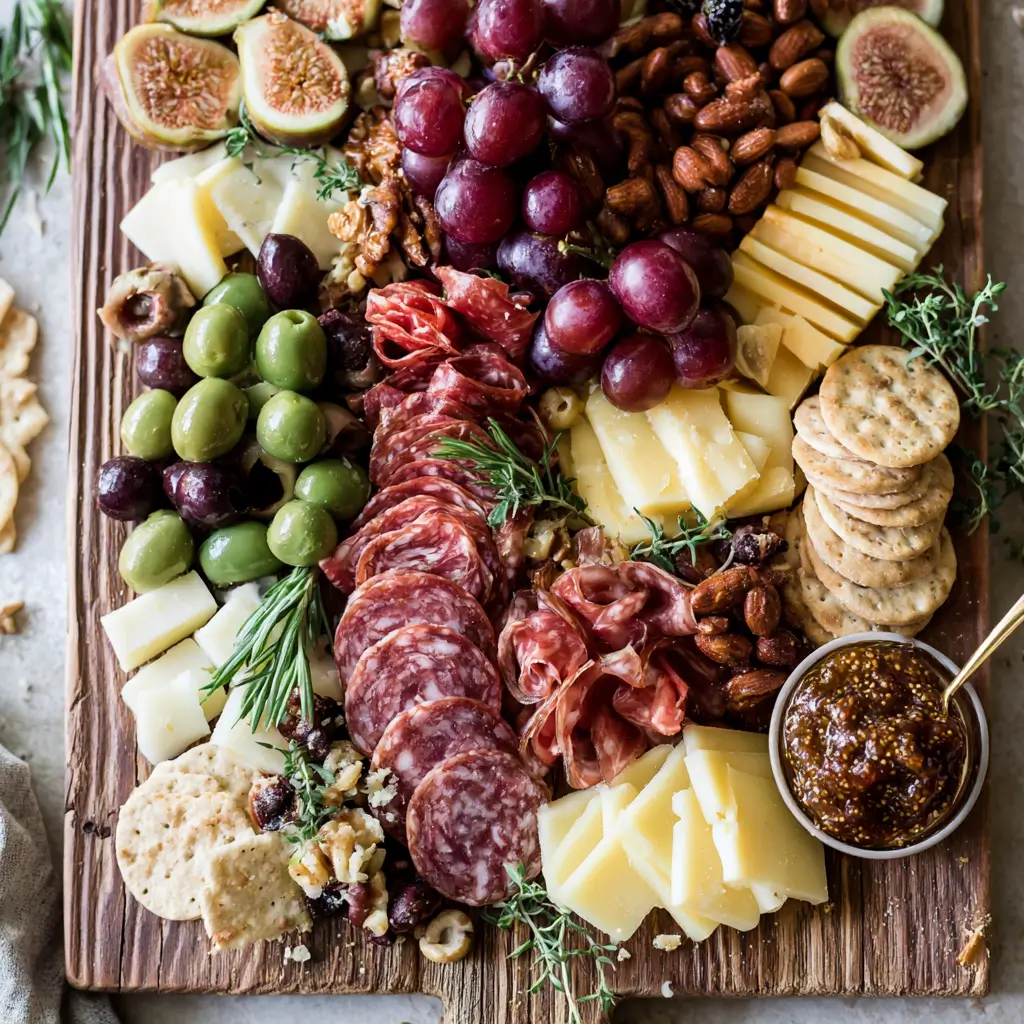
Building a beautiful board is one of the easiest ways to make guests feel welcomed, whether you are hosting a holiday, a casual game night, or a quiet evening at home. This charcuterie board guide keeps things simple, balanced, and full of flavor, with plenty of ideas for meats, cheese, and pairings that work well together.

Charcuterie Board Guide
Equipment
- 1 Serving board
- 1 Small bowls for dips and loose items
- 1 Tongs or cocktail picks for serving
Ingredients
Charcuterie Board Ingredients
- 2 to 3 meats such as sliced turkey salami, roasted turkey breast, turkey pepperoni, or smoked turkey slices
- 2 to 4 cheeses such as sharp cheddar, gouda, brie, manchego, mozzarella pearls, or cream cheese
- 1 to 2 crackers or breads such as water crackers, seeded crackers, baguette slices, pretzel crisps, or crostini
- 2 fresh fruits such as grapes, strawberries, figs, apple slices, pear slices, or berries
- 1 dried fruit such as apricots, cranberries, dates, or cherries
- 1 crunchy item such as almonds, pistachios, cashews, pumpkin seeds, or marcona-style almonds
- 1 briny item such as olives, pickles, pepperoncini, or pickled onions
- 1 sweet accent such as honey, fruit preserves, fig spread, or apricot jam
- 1 fresh herb such as rosemary, thyme, basil, or mint
- 1 optional dip such as mustard, hummus, whipped cream cheese, or fruit dip
Instructions
- Start with a wooden board, serving platter, tray, or even a large cutting board. Make sure it is clean and dry, then place small bowls on the board first for dips, spreads, olives, or anything loose.
- Arrange the cheeses next, spacing them around the board so the layout feels balanced. Then tuck in the meats, folding or rolling slices so they look full and easy to grab.
- Place fresh fruit, dried fruit, crackers, and bread around the larger items. Use the gaps to add nuts, pickles, and sweet touches, which helps the board feel abundant without looking crowded.
- Add fresh herbs for a polished look, then check for open spaces and fill them in with a few more small bites. Right before serving, set out small tongs, spoons, or cocktail picks so guests can serve themselves easily.
Notes
Why You’ll Love This Charcuterie Board Guide
This board looks impressive, but it is really just a thoughtful mix of textures and flavors. You can assemble it ahead of time, customize it for the season, and use ingredients you already enjoy. It is also easy to scale up or down depending on the number of people you are serving.
Charcuterie Board Guide Ingredients & Substitutions
Use a mix of savory, creamy, crisp, and sweet elements so every bite feels interesting.
- Meats: sliced turkey salami, roasted turkey breast, turkey pepperoni, or smoked turkey slices
- Cheese: sharp cheddar, gouda, brie, manchego, mozzarella pearls, or cream cheese
- Crackers and bread: water crackers, seeded crackers, baguette slices, pretzel crisps, or crostini
- Fresh fruit: grapes, strawberries, figs, apple slices, pear slices, or berries
- Dried fruit: apricots, cranberries, dates, or cherries
- Crunchy extras: almonds, pistachios, cashews, pumpkin seeds, or marcona-style almonds
- Pickled or briny items: olives, pickles, pepperoncini, or pickled onions
- Sweet accents: honey, fruit preserves, fig spread, or apricot jam
- Fresh herbs: rosemary, thyme, basil, or mint for garnish
- Optional dips: mustard, hummus, whipped cream cheese, or a fruit dip
If you want to simplify, choose one item from each group and build from there. A good board does not need to be overflowing, it just needs a nice mix of color and contrast.
Step-by-Step Instructions to Make Charcuterie Board Guide
1. Choose your board
Start with a wooden board, serving platter, tray, or even a large cutting board. Make sure it is clean and dry, then place small bowls on the board first for dips, spreads, olives, or anything loose.
2. Add the larger items
Arrange the cheeses next, spacing them around the board so the layout feels balanced. Then tuck in the meats, folding or rolling slices so they look full and easy to grab.
3. Fill in with fruits and extras
Place fresh fruit, dried fruit, crackers, and bread around the larger items. Use the gaps to add nuts, pickles, and sweet touches, which helps the board feel abundant without looking crowded.
4. Finish with the details
Add fresh herbs for a polished look, then check for open spaces and fill them in with a few more small bites. Right before serving, set out small tongs, spoons, or cocktail picks so guests can serve themselves easily.
Tips for Success
Keep the flavor balance in mind, creamy cheese pairs well with salty meats, crisp fruit brightens the board, and something sweet helps round everything out. Let cheese sit at room temperature for a short time before serving, so the flavor and texture are at their best.
Cut some cheese into slices and leave some in wedges or cubes for variety. If you are making the board ahead of time, cover it lightly and chill it, then add crackers and bread just before serving so they stay crisp.
Variations of Charcuterie Board Guide
You can easily adjust this board for different moods and seasons. Try an autumn version with apples, cheddar, fig spread, and walnuts, or a spring version with berries, brie, honey, and fresh herbs.
For a more savory spread, lean into olives, sharp cheese, mustard, and roasted turkey slices. For a sweeter board, add more fruit, chocolate pieces, and creamy cheese with a drizzle of honey.
Serving Suggestions: What to Pair with Charcuterie Board Guide
This board pairs nicely with sparkling water, fresh lemonade, iced tea, or a simple fruit spritzer. If you are serving it as part of a meal, add a light salad, a warm soup, or roasted vegetables to round out the table.
It also works well with other small bites like stuffed mushrooms, deviled eggs, or skewered vegetables. For a special occasion, set it out alongside a dessert platter so guests can nibble and mingle at their own pace.
Storage & Reheating Instructions
Store leftovers in separate airtight containers whenever possible, since crackers, fruit, meats, and cheese each keep best on their own. Cheese should be refrigerated and brought back to room temperature before serving again.
There is no reheating needed for the board itself, but bread and crackers can be refreshed briefly in a low oven if they soften. Fruit is best enjoyed fresh, and any cut produce should be used within a couple of days for the best texture.
Memories Made Around the Table
There is something special about a board like this, because it invites everyone to slow down, try a little of everything, and talk between bites. It is the kind of food that feels casual and elegant at the same time, which is why it shows up so often at our family gatherings and easy weekend get-togethers.
FAQs
How many items should I include on a charcuterie board?
A well-balanced board can be built with just a few items from each category. Aim for 2 to 3 meats, 2 to 4 cheeses, 2 fruits, 1 or 2 crunchy items, and 1 or 2 spreads or dips.
What cheese works best for a charcuterie board?
Choose a mix of textures, such as one soft cheese, one firm cheese, and one bold cheese. Brie, cheddar, and gouda are all great starting points because they offer variety and pair well with both sweet and savory items.
Can I make a charcuterie board ahead of time?
Yes, you can prep most of it a few hours ahead. Keep crackers and bread separate until serving, then assemble the final details just before guests arrive so everything stays fresh.
What fruits are best for a board?
Grapes, berries, figs, apple slices, and pear slices are all excellent choices. They add color, freshness, and a nice contrast to rich cheese and savory meats.
Final Thoughts
A great charcuterie board is less about perfection and more about thoughtful balance, good ingredients, and a welcoming presentation. Once you learn the basic formula, you can mix and match pieces to suit any occasion and make the board feel personal every time.